Epoxy flooring for Palo Alto garages, home gyms and commercial spaces, installed over concrete that's diamond-ground and moisture-tested first — so the coating grips the slab instead of peeling.
Call Now for a Free EstimateTell us about the floor and we'll call you back the same working day.
Prefer to talk? Call (650) 300-3108
Epoxy flooring is a two-part resin coating that bonds to bare concrete and hardens into a tough, seamless surface. In Palo Alto, most of these floors go into garages, but they also show up in home gyms, workshops, labs and restaurant back rooms.
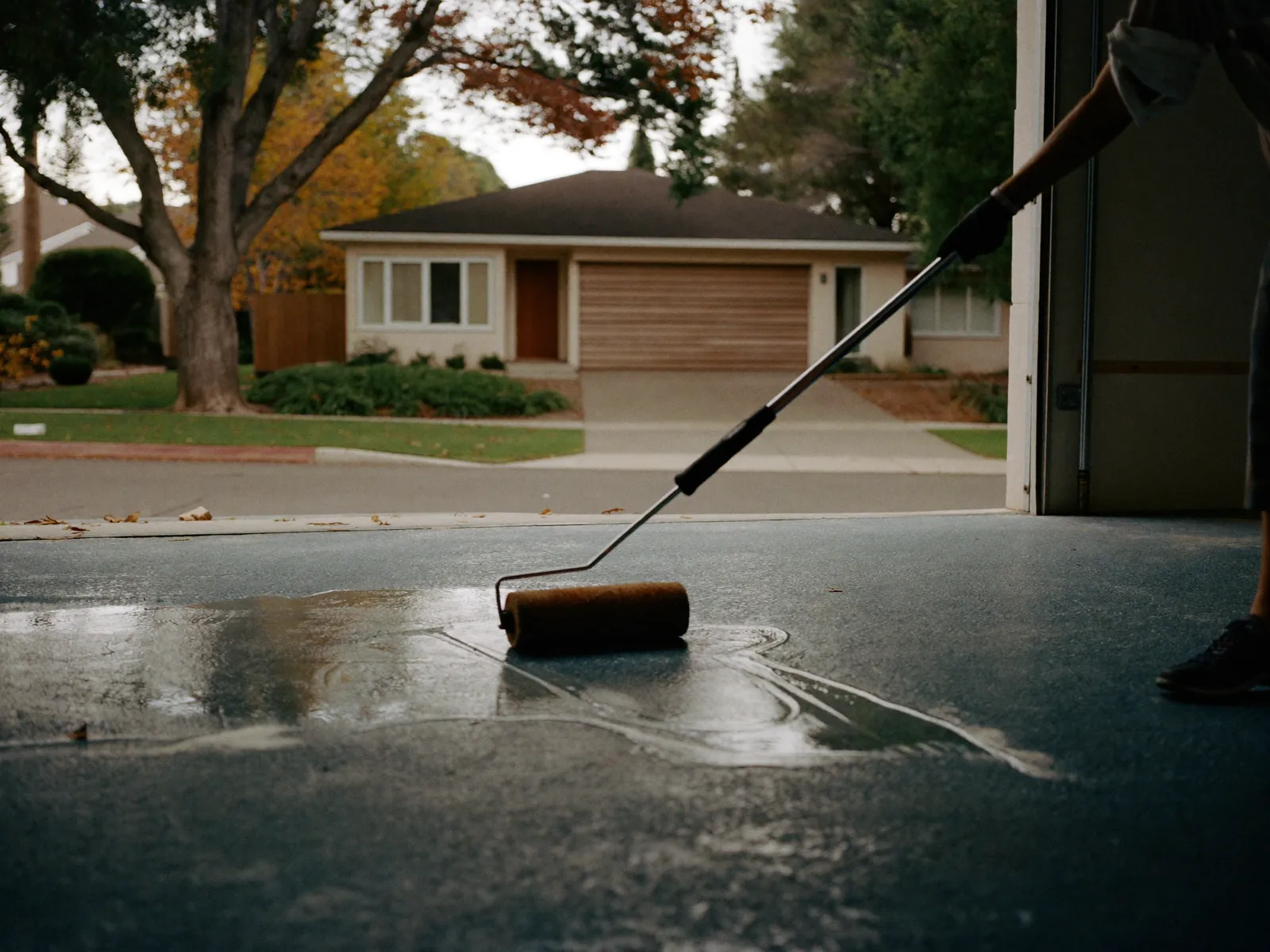
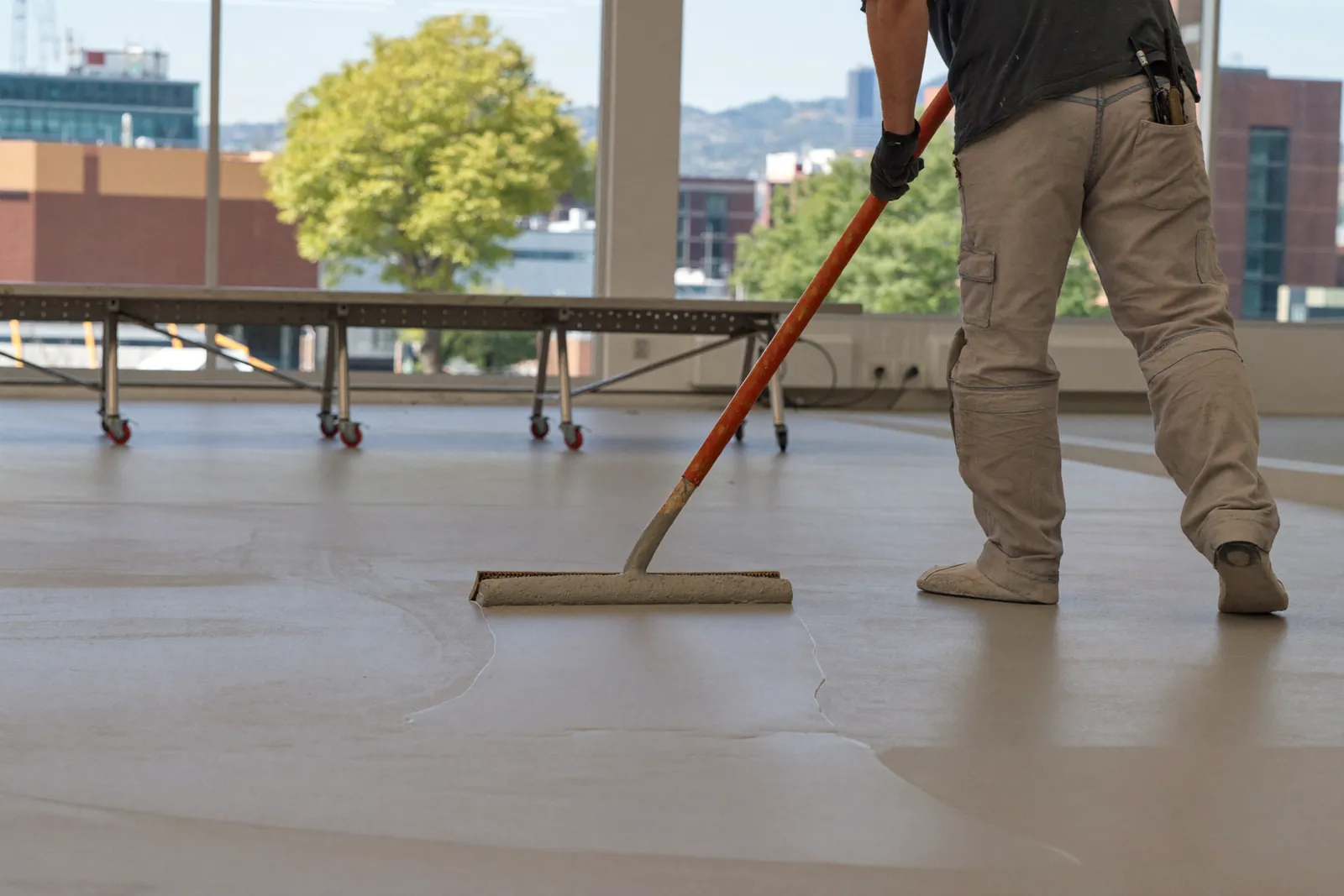
The resin is mixed on site and spread over a slab that has been diamond-ground. Grinding opens up the top of the concrete so the coating can soak in and lock on. A clear topcoat goes on last and takes the daily wear from tires, tools and foot traffic.
Homeowners usually call when the garage floor is dusty, stained or covered in peeling paint. Business owners call when a floor needs to stand up to carts, chemicals or hot-water cleaning.
Four coating systems, all built on the same careful prep. Pick the one that matches how you use the space.
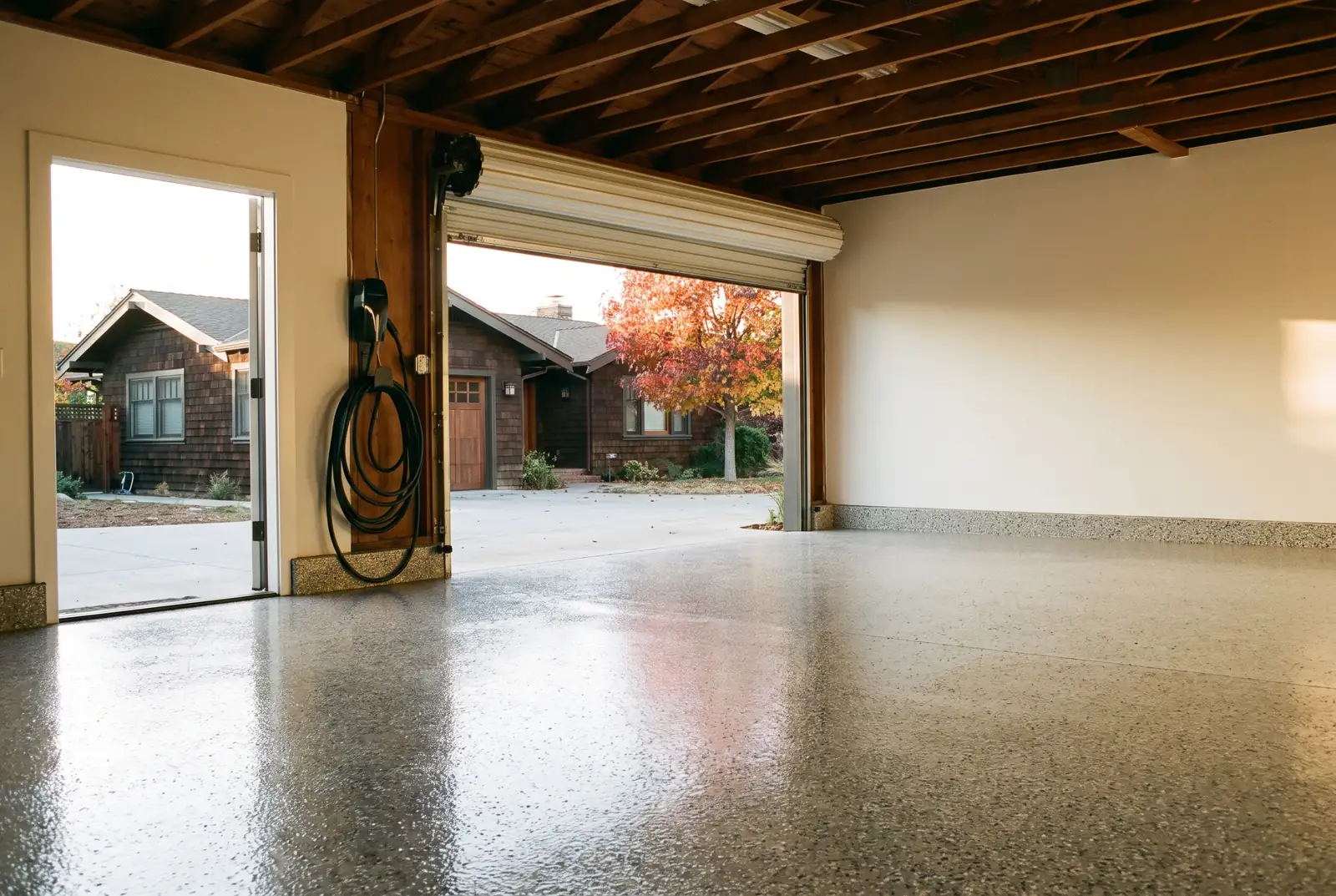
A flake system over a ground slab, sealed with a clear topcoat that handles hot tires, oil drips and EV charging gear.
Garage floor epoxy details
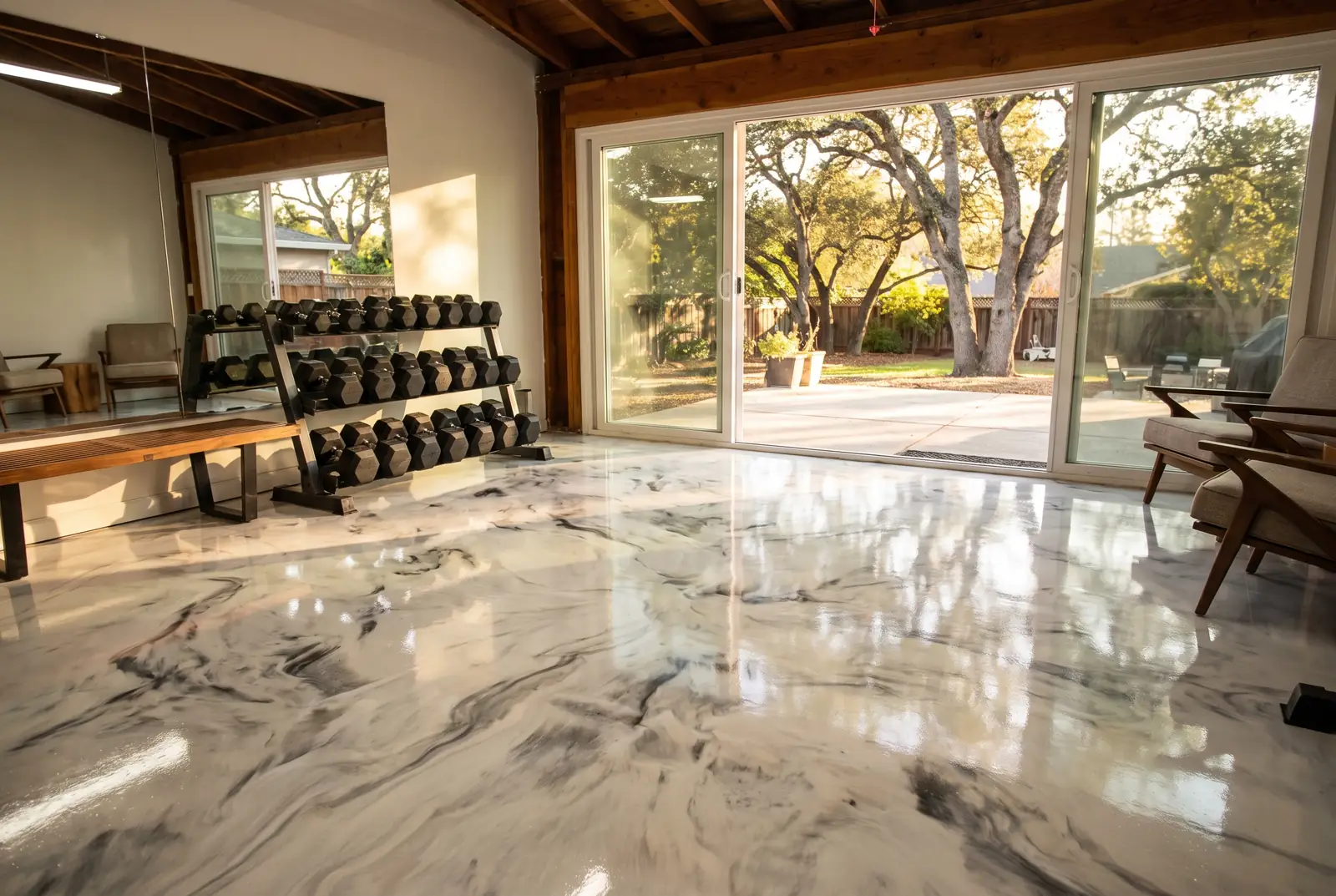
Hand-worked metallic pigment that gives a garage gym, studio or showroom a glossy, flowing finish.
Metallic epoxy flooring details
A fast-curing, UV-stable coating that can have a garage back in service in about a day.
Polyaspartic coating details
Chemical-resistant and washdown-ready systems for labs, kitchens, offices and storage, installed around your hours.
Commercial epoxy flooring detailsMost calls start with one of these situations.
Garage floor paint and DIY kits often lift under hot tires within a year or two. Once the edges start curling, the peeling keeps spreading.
Bare concrete gives off fine gray dust and absorbs oil, coolant and paint. A sealed floor wipes clean with a damp mop.
Putting in a charger is a natural time to clear the garage, fix the floor and make the space easier to keep clean.
A bright, sealed floor makes a converted garage feel like part of the house instead of overflow storage.
A finished garage floor stands out when buyers tour the home, and it is one of the quicker upgrades to finish before a listing goes live.
Rolling carts, spills and daily cleaning grind bare concrete down. A commercial coating adds a wear layer that's easy to mark and wash.
A typical two-car garage takes one to two days on site. Here's what happens from the first call to parking on the new floor.
We measure the floor, look at every crack, test the slab for moisture and ask how you use the space. You get a written quote before anything is scheduled.
A walk-behind grinder with a vacuum shroud removes old paint, sealer and stains and opens up the surface. The dust goes into the vacuum, not into your house.
Cracks, pits and chipped joints are filled with a fast-setting repair material and ground flush with the floor.
The base coat goes down, followed by color flakes, a solid tint or metallic pigment.
A UV-stable topcoat seals everything in. Fine anti-slip grit can be mixed in for areas that get wet.
Foot traffic the next day and cars back in after a few days. We walk the finished floor with you before we leave.
A local detail: winter mornings here can be cold and damp, and resin cures slowly on a chilly slab. Between November and March we check slab temperature and dew point before coating and plan the schedule around the weather.
Palo Alto has more Eichler homes than almost any other city, and many were built with radiant-heat tubing inside the concrete. We grind only the surface, never saw-cut or drill blind, and fill cracks instead of cutting them out.
Neighborhoods closer to the Bay sit on clay soil with higher groundwater, and many older slabs have no vapor barrier. Every floor gets a moisture test, and a moisture-blocking primer goes down when the readings call for it.
Prep, repairs, the coating system and the timeline are all spelled out at the estimate. What you approve is exactly what gets installed.
Every floor is quoted after we see it in person, and the estimate is free. These are the things that shape your quote:
You get a written quote at the visit with every line item explained, so there are no surprises on install day. Request your free on-site estimate or call (650) 300-3108.
A floor coating fits most garages and shops, but not every slab or situation. Here's an honest way to tell.
Homeowners here often ask whether they should pick epoxy or a polyaspartic system. Both bond to ground concrete and both look great. The real differences are cure time, UV resistance and how the floor will be used.
Epoxy is thick and builds up well over rough or uneven concrete. It is a strong choice for interior garages, shops and basements. It cures slowly, so the garage is usually out of use for a few days, and standard epoxy can yellow in direct sun.
Polyaspartic cures much faster, often allowing foot traffic the same day. It stays clear and color-stable in sunlight, which matters for garages that sit open on sunny afternoons in Midtown or Barron Park. A polyaspartic floor coating is also flexible, so it handles temperature swings without cracking.
Many of our installs combine the two: an epoxy base for build and bond, topped with a polyaspartic clear coat for UV and scratch resistance. That mix gives you the strengths of both.
Not sure which one you need? We test your slab, ask how you use the space, and recommend the system that makes sense. No pressure, just a straight answer.
The garage is only the start. Many of the slabs we coat in Palo Alto never see a car.
Lot sizes in Old Palo Alto and Crescent Park do not leave much room to build out, so homeowners build in. A detached garage becomes a studio, an accessory dwelling unit goes up over a new slab, or a side yard shed turns into the home office that remote work made permanent. Every one of those spaces starts with bare concrete, and bare concrete dusts, stains and feels cold underfoot.
For living and working spaces we lean toward smooth or lightly textured solid-color systems and metallic finishes rather than heavy flake. They read as a finished floor, not a shop floor, and they pair well with the mid-century and Eichler-style homes common around Greenmeadow and Fairmeadow. Because those slabs often sit directly on grade with no vapor barrier, we moisture-test every one and use a mitigating primer where readings call for it.
Studios for ceramics, painting or woodworking get a thicker build and a chemical-resistant topcoat, so glaze, solvent and glue clean up without leaving a shadow. Home gyms get a touch more texture under rubber mats. Our Concrete Coatings for these rooms are chosen the same way we choose a garage system: by asking how the space will actually be used, then matching the materials to that answer rather than to a catalog.
Mild weather makes Palo Alto one of the easiest places to own a coated floor. A few habits keep it looking new.
Palo Alto garages rarely see the hot-tire damage that ruins floors in hotter inland cities, and winters are too mild for road salt. What they do see is redwood debris, bike grease, wet leaves tracked in from Foothills trails and the fine grit that drifts in off El Camino Real. None of it is a threat to the finish, but all of it dulls the shine if it sits for weeks.
Sweep or dust-mop every week or two, and rinse the tire paths after a rainy drive. For a deeper clean, warm water with a little neutral cleaner is all a concrete coating needs. Skip citrus degreasers and anything acidic, which can haze a topcoat over time. Wipe up motor oil and brake fluid the same day, not because they will stain a sealed floor but because they are slippery.
Put felt or rubber pads under heavy items that stay in one place, such as a tool chest or a kayak rack, and use a mat under the e-bike charger to catch drips. If a worn patch shows up where you park after many years, that is the topcoat doing its job. A fresh clear coat over the existing system restores the gloss without starting over, and we can usually do that in a single morning.
A coating is only as good as the prep under it. A few questions up front tell you whether an installer will do that prep right.
Start with the slab. Ask how the crew will open up the concrete. Diamond grinding is the standard for a reason; acid etching leaves a weaker profile and usually shows up later as peeling at the tire paths. Then ask about moisture. Many Palo Alto homes sit on slabs poured straight on grade, and some Eichlers around Greenmeadow and Charleston Meadows have radiant heating lines running through the concrete. A careful crew checks moisture readings, maps where the tubing runs, and grinds with that in mind instead of guessing.
Next, ask what happens to cracks, control joints and the old sealer some previous owner rolled on in the 1990s. Every one of those needs a plan before the first coat goes down. Ask which system is going on the floor, how many coats, and how long until you can walk on it and park on it.
Finally, ask what the warranty covers and who you call if a spot lifts. Any good garage epoxy contractor will answer all of this plainly and put it in writing. If the answers are vague, or the visit takes ten minutes without anyone looking at the concrete, keep looking. We walk every slab before we recommend anything, and we are happy to explain each step of the job before you book.
The price depends on the size of the floor, how much repair the concrete needs and which coating system you pick. We measure and test the slab at a free on-site estimate and give you a written quote before anything is booked.
Yes, in most cases. A coating only needs the very top of the slab ground, which stays well above the heating tubes in a typical radiant floor. What we never do on a radiant slab is saw-cut or drill without knowing where the tubes run, so cracks are filled and ground flush instead.
A professionally installed coating over a properly ground slab usually lasts 15 to 20 years in a home garage. The clear topcoat takes most of the wear, and it can be scuffed and recoated later instead of redoing the whole floor.
Most floors take foot traffic the next day, and cars can usually go back in after a few days. Cure time depends on the coating system and the temperature, and you get the exact timeline for your floor at the estimate.
Yes. The charger and its conduit stay in place, and the coating is cut in neatly around any mount or pedestal. If a charger is coming soon, it helps to have the electrical work done first so nothing gets drilled through the new floor.
A smooth gloss finish can get slick when it is wet. Flake floors have a natural texture, and fine anti-slip grit can be added to the topcoat for garages, patios and commercial floors.
Yes. Diamond grinding opens the surface so the resin bonds into the concrete instead of sitting on top of it. Acid etching alone is a weaker substitute and one of the most common reasons garage coatings peel.
Call for a free on-site estimate — we'll measure, test the slab and leave you a written quote.
Call (650) 300-3108 for a Free Estimate Request an Estimate Online536 Bryant St Suite 2, Palo Alto, CA 94301
Please note: This is our service business address — not a storefront or showroom. Palo Alto Epoxy Flooring is a mobile epoxy flooring service, so we come to you and the office isn’t open to walk-in visitors. Call us and we’ll set up a free on-site estimate.